Sunday, April 19, 2026

Mark's Pro Tip #8

Pro Tip #8 - Utilize Escrow Accounts


Verifying financing from a film investor can be tricky. Beware any investor who merely wants to show you a bank statement. That money could be there today, gone tomorrow. Be even warier of those who say "trust me." Before committing yourself to any production expenses for your film, you need to make sure you have access to the capital you need.

When negotiating with financiers, start with an escrow agreement that requires them to place money into an escrow account for a period -- say 30 days -- while you work out the terms of the financing deal. If you can't come to an agreement on the financing deal by the 31st day, the escrow holder will return the money to the investor. If you do work out terms, the escrow holder will release funds to you to make the movie.

 This is the only viable way to hold third parties accountable when they say they have the money to give you for production. Asking you trust them without them trusting you is a shady proposition. Escrows create trust on both sides by making both sides accountable. Both sides have to do their part to make the deal happen: filmmakers must agree to terms that financiers find amenable and financiers need to provide what they say they can.

Sunday, December 7, 2025

How to Effectively Use Three-Act Structure in Film Scripts

By Mark Heidelberger

I once had an executive tell me, “Great story, mediocre script.” When I pressed him on what made the script mediocre, he fumbled about trying to explain it – how it took too long to get to moment X or that moment Y had no conflict between the hero and villain – before finally settling on the fact that, “Look, it just didn’t read the way professional scripts usually read.” This was early in my career, so I simply told myself his lack of articulation meant he didn’t understand the material.

However, as I acquired more experience over the years, I started to better understand what he was getting at. A viable script will have a clear three-act structure that’s driven by the protagonist’s actions and his interactions with an antagonist. This ensures that needed drama occurs as the story progresses, and at a pace that will satisfy audience expectations. While it might sound rote, it’s a tried and true formula that studios, producers, directors, actors and others are looking for.

Most screenwriters have heard of three-act structure, but too often distill it down to having a “beginning, middle and end.” This won’t cut it. Hollywood professionals are used to seeing three-act structure executed in a more precise way, where certain beats involving certain characters happen around certain pages. They might not realize your first act break didn’t involve your hero or that your midpoint came 10 pages too late, but they’ll “feel” that it’s off and pass. So here are the key anchors you want to get right in a 120-page script so you don’t get the feedback I got so many years ago:

Teaser & Set-Up

Establish the protagonist’s ordinary world in the first 15 pages – his life before something happens to alter its course. Where we get to know what kind of character we’re going to be following, what he wants and what flaws he has. Moreover, the first two to five pages should be an opening sequence that teases the story to come and is so darn interesting, it immediately hooks the reader.

Inciting Incident

Something has to happen to the protagonist around page 15 to change his world. And whatever it is, it should set up the conflict with the antagonist. You have some flexibility with page count here, but if your inciting incident starts to go much past page 20, you have too much set-up.

First Act Break

The protagonist needs to make a choice around page 30 that sends him on the journey we’re going to see over the next 90 pages. Note: It can’t be someone else making the choice or having the choice made for him like I’ve seen some writers try to do. Structure is built around the hero’s actions.

Rising Action

From pages 30 to 60, the protagonist needs to make progress in his endeavors. We should see him act and the antagonist counteract, back and forth. But ultimately, the protagonist rises toward his goal. Think of the character trajectories like this: as the protagonist rises, the antagonist falls and vice versa. This inverse relationship is at the heart of screenplay conflict.


Midpoint

The protagonist hits a false high point around page 60. Why is it false? Because the protagonist hasn’t yet learned his lesson, overcome his flaw or defeated the antagonist even though things look rosy otherwise. It’s also critical to have another incident here that alters the protagonist’s trajectory downward.

Falling Action & Betrayal Moment

From pages 60 to 90, the protagonist loses ground to the antagonist and his life starts falling apart. He still hasn’t heeded the story lesson, and he alienates many of those around him. Halfway through this section, there is sometimes a “betrayal moment” as well where either the protagonist breaks someone’s trust or has his trust broken by someone else.

Second Act Break

The protagonist needs to be at the lowest point we’ve ever seen him around page 90. Lower than he was at the beginning. Lower than he’ll be at the end. All needs to seem lost. Don’t be afraid to take your hero and drop him off a metaphorical cliff. At this point, some outside influence will need to rally him to stand up and fight.

Climax

The last quarter of the script is, of course, the showdown between protagonist and antagonist, including any build-up to get there. How it ends will define whether it’s a comedy or tragedy. If the protagonist prevails, it means he’s overcome his flaw, learned the lesson and got what he needed, even if it’s not what he originally wanted.

Coda

While not necessary, the last couple pages can serve as a tag that wraps up any loose ends and offers the reader closure. It usually doesn’t go more than one or two scenes though.

I understand this may feel a bit mechanical, but there’s a lot of creative leeway within this structure, and faithful execution is often what sets apart Joe Pro from Joe Schmoe. Once you find success following the rules, you’ll have more wiggle room to break them because others will know you understand them. My advice: read as many professionally written scripts as possible (Drew’s Script-O-Rama has tons) to observe how the structure is employed in practice. You’ll find doing it right means not only a great story, but a great script, too.


Sunday, November 9, 2025

Mark's Pro Tip #7

Pro Tip #7 - Just get the picture made!!!


There were several times early in my career when I had the chance to get a movie into production, and due to my own obstinance, stubbornness, whatever you want to call it, the project stalled. Largely because my parameters for getting it made were too rigid.

As an example, I had developed and was packaging a horror/Western feature many years ago, and I was intent on doing it on a minimum $10 million budget. I had attached a very good director, name actors and other elements of value.

But raising the money is the hard part, and I quickly learned that others might not see the same value in the project that you do. When I was offered $750,000 to do it for the Sci-Fi Network, I balked. No way that was going to happen. I'd have to scrap most of the elements I attached! Well, it turns out the film never got made at all because I could only see it getting made one way.

This is not to say you should sacrifice your story's integrity or other key factors; there's no point in making the movie if you don't want that movie made. Heck, if you want to tell the story of Billy the Kid and your financier wants to do it in outer space, you might move on.

No, my advice here is to simply pick your battles. Stick to your guns on the things that truly matter, but be flexible, amiable and willing to compromise on areas that are not make-or-break. You'd be surprised how many different ways a good movie can be made, whether it's on a lower budget or with lesser name actors or with a different director or, yes, even in space. Be open to having the conversation to see if there is a happy medium between your vision and what other stakeholders want.

Because at the end of the day, you just want to get the picture made. It might not be 100% of your original vision, but at least it made it to the screen. Audiences, on the other hand, will never get to see the picture you didn't make.

Sunday, July 27, 2025

Mark's Pro Tip #6

Pro Tip #6 - Treat every job like an interview for your next.


As a freelancer in the entertainment industry, we're always on the lookout for our next gig. Even when we're currently on a gig. That means every person who hires you may be in a position to hire you again. Or introduce you to someone else who can hire you. Or you may just happen to meet some random on set who's about to jump on a new project and can slide your name to the line producer. But will they?

Bottom line: go into every job with the mindset that it's a job interview for the next one, because it is. In a business where word of mouth is crucial, being a true pro that can be counted on and that people like to work with is essential.

How you handle yourself on set, especially when problems arise. How you speak to others above and below you. Whether you show up on time. Whether you go that extra mile. Whether you stay on budget. How much you bitch and complain. How prepared and knowledgeable you are in your area of expertise.

And make no mistake, you are being watched. Everyone in Hollywood whispers about you behind your back while smiling to your face. The question is whether they're whispering nice things or not. So do yourself a favor: show up to every gig prepared to give your best. Your next gig may just depend on it.

Sunday, June 15, 2025

Mark's Pro Tip #5

 Pro Tip #5 - Learn something new every day.

I have been toiling away in the entertainment industry for 25 years, and it never ceases to amaze me how much there is to learn. Not only are there so many facets to the filmmaking process that you can educate yourself on, from development to production to post to marketing and distribution, but the industry is constantly evolving and changing. I literally learn something that I didn't know every day I work.

Take rapidly changing camera tech. Whole conventions are dedicated to annual changes in the field. How about the world of user-generated content. AI or XR techniques. Reasons for the migration of films overseas. The use of new platforms for fundraising. The latest hot actor on the scene that no one ever heard of until last week. Newly updated budgeting and screenwriting programs. Previously unknown films just waiting to be discovered and studied. Shifts in marketplace economics. The list goes on and on.

Listen, read, open your mind to what's new, and you'll find yourself becoming a more well-versed and versatile filmmaker. The more knowledge you have to share in your area of expertise, whether a producer, AD, DP, editor, writer, makeup artist, sound mixer, you name it, the more valuable you become to others.

As a collaborative medium, filmmaking offers all of us the chance to learn something new each and every day. So embrace that gift. The day you stop learning because you know everything, well, that's the day you should go do something else.

Sunday, May 4, 2025

Mark's Pro Tip #4

 Pro Tip #4: The value of a script is not what you think!

I get a lot of novice writers coming to me for story and budgeting services, and a common refrain I hear is that they've written the next Citizen Kane. Not only is this NEVER the case, but the people who say this with the most gusto often have the WORST material. It's not that they're trying to write something bad. No artist sets out to craft a piece of shit. It's simply that they're energized from having watched too many movies, but haven't received the sort of training in the craft that allows them to execute at a professional level (or even know what professional screenwriting looks like). So here's a little secret for everyone who thinks they've written The Shawshank Redemption:

You script is literally worth the paper it's printed on.

Yes, seriously. If it costs you $4.50 to print out your script, then that's what it's currently worth. Not until someone other than you has decided they want to buy it, finance it, make it, etc., does the value of that script increase. Don't fall into the trap of thinking your script is special. There's 100,000 spec scripts floating around Hollywood on any given day, and nearly everyone has an overly high estimation of theirs.

If you really want to boost the value of your script, there are a few steps you can take that will give you a better chance: 1) Learn the craft! Study it. Writing is hard. Just typing out your idea in Final Draft doesn't make you a screenwriter. Master classes and extension courses are available, so you don't need a four-year degree. Just a dose of humility. 2) Execute! Read scripts that have sold and emulate that style and quality. 3) Solicit feedback from people not related to you and who have no reason to be nice to you. Professional coverage services, writer groups and screenplay competitions that provide feedback are a few great options. 4) Rewrite!!! And if you can't get it over the line, hire someone to rewrite it.

This industry is all about getting kicked in the teeth and then saying, "Thank you, sir. May I have another?" This is the most likely path you'll face in getting your script produced. Understanding that your script is not as great as you think and that you'll face a lot of rejection is key to preparing yourself for the fight ahead. But if you stick with it and put in the work, you may just come out the other side with a script that is worth something someday.

Sunday, February 16, 2025

Mark's Pro Tip #3

Pro Tip #3 - Not all money is good money.

"Just get the movie made," I often say to clients, colleagues, mentees and friends. Getting your movie made is paramount. That sometimes entails killing your darlings or making sacrifices you wouldn't otherwise make. It also means sometimes taking less money or money with strings attached. However, it's imperative that you're able to determine whether money is "good" money or "bad" money, as the last thing you want to do is end up in a legal situation or worse. Here are a few ways to determine whether money is "good" (worth taking) or "bad" (not worth taking):

- Are the recoupment terms overly onerous? In other words, might you be unable to meet the obligations the investor is asking for, even under the rosiest scenario?

- Does acceptance of the money put your other investors in a bad place or, worse yet, cause them to drop out because it now makes their position untenable?

- Does the investor seem to have unrealistic expectations of what you can truly do?

- Is the investor asking you to personally guarantee return of the money at some future date?

- Are there strings attached to the money that otherwise put you, your team, your other investors or any others working on the project in a precarious position legally, financially or reputationally?

- Does the investor demand he retain control of the funds and all key decision-making during the production process?

- Is the investor refusing to work with legitimate organizations like major banks where funds can be verified and escrowed or provide other reliable methods of verification?

If you answered "no" to these questions, the money may very well be good to go. If you answered "yes" to these questions, it's probably not. To know for sure, the best bet is to consult legal counsel and any knowledgeable stakeholders that you trust.

At the end of the day, if you need to turn down some bad money, just remember that that funding source is not the only game in town and that there are plenty of good money sources out there to fund your movie. You just need to go find them.

Sunday, December 8, 2024

Mark's Pro Tip #2

Pro Tip #2 - Raising money for films is hard no matter what.

Whether you're raising $100K or $10M, it's all relative and it's always difficult. A lot of young filmmakers make the mistake of thinking it's easier to raise money if they ask for a lesser amount. While it may be true that more people can afford to give $100K than $10M, getting those people to part with their money is just as challenging as getting it from richer people. You need to convince someone why they should give you their money. In fact, if the investor is savvy, sometimes it's better to ask for more money than less. A few reasons for this.

First, it sets the bar and gives you room to negotiate. How do you know they won't give you $1M unless you ask?

Second, an investor will want justification for why you're asking for that amount. If you say you can make a $1M film for $100K, you better be able to back it up with a budget that shows exactly how you're going to pull it off. Chances are you'll have to sacrifice a lot of quality to do it if you can do it at all. If, on the other hand, you're budget shows how you can confidently deliver that film for $1M and that's what you're asking for, it's going to give the investor confidence.

Third, a higher ask from the investor can be justified by the cost of more valuable elements like star actors or P&A funds that will help the film make a return on investment. A $100K film with no names in it has less of a chance of ever recouping than a $10M film with several names.

So when asking for money, ask for what you need and be prepared to back it up with a legitimate budget.

(Side note: This doesn't mean one investor has to give you the entire budget. If you need $1M to properly make your film, you may ask an investor to give you $100K with the caveat that you're asking 10 different investors for that same amount and will only be able to greenlight once all 10 are in place.)

Saturday, September 28, 2024

Mark's Pro Tip #1

 As a change of course from previous posts, I thought I might start sharing a producer "pro tip" for aspiring young filmmakers every time I write on this blog. Something useful and practical. A piece of advice I might give if I was teaching a college course or mentoring someone in the PGA. So with that said, here goes nothing...


Pro Tip #1

Make the kind of content you would want to go see. Too many producers worry about "what's hot" or "what's now" or they try to chase distributors' fancies. The problem is that what's in right now might not be in a year or two from now when you're finally done your film and are ready to release it. Instead, focus on telling stories you would pay to see. The truth is that every genre and style has some audience out there for it. Obviously, some markets are more limited than others, and such realities may constrain things like overall budget, cast, marketing and the distribution strategy, but that doesn't change the fact that you should pursue a course that drives your passion and leaves you fulfilled. Because that passion and care and enthusiasm will show up on the screen just like the lack of it will. In this respect, you go into the endeavor as both artist and audience member, allowing you to do justice to both sides.

Sunday, July 21, 2024

Dear Indie Film Lovers,

I thought I might be a bit overdue for an update on my filmmaking adventures, so here is the latest goings-on in my crazy corner of the world:

- My feature film "Last Night on Earth" premiered in Beverly Hills at the end of May and was released in June to theaters across 50 US cities. It has now just arrived on home entertainment platforms, including Apple TV+, Fandango at Home, Google Play, Amazon Prime Video and Youtube Premium. I'm very proud of this one -- especially what we were able to do with the budget we had. You can see the official trailer here: https://www.youtube.com/watch?v=rB_6ExXDZGs


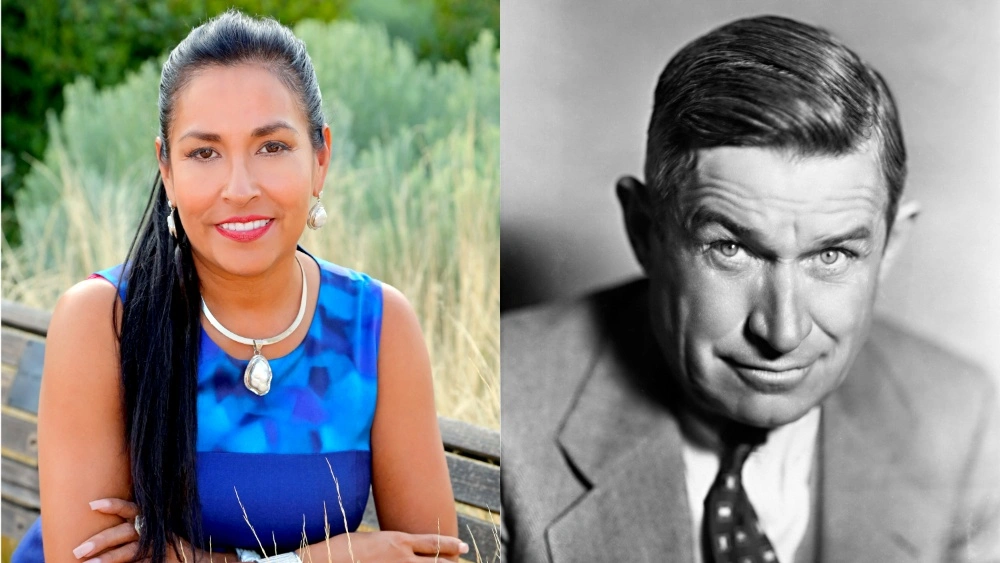
- My Oklahoma-based feature "Will to Win" nears ever closer to production as we continue our capital raise. We have attached Sean Astin and Patrick Warburton to key roles, and have started early talks with Amber Midthunder to play the lead. While we're considering Vancouver, Manitoba and other areas to shoot the film in order to maximize our dollar, our top choice is still Oklahoma since the state is so central to the story, the world and the characters, especially Will Rogers. But because this is a baseball movie, if we don't go into production by September, we'll likely have to wait until next spring. The film will be directed by Sean McNamara, who most recently did "Reagan."

- Speaking of Oklahoma, I have separately been assisting Oktoberfest Tulsa as they seek a tax credit for their upcoming documentary on the event. Named one of the five best Oktoberfests in the US, the film will showcase the origins of the event and the impact it has had on the local area.

- My New Mexico-based feature "American Saviors," with the talented Jon Keeyes directing, has attracted strong interest from cast, including Anthony Hopkins, Luis Guzman and Michael Ironside. The focus now in order to complete financing and get a greenlight is to cast the two leads. If we get some bankable stars in those roles, this one could move very fast.

- I just got hired by a longtime client, Kugga Entertainment, to re-purpose a web series I did for them several years back called "The Offer" into mobile webisodes. This is a new form of content distribution pioneered by companies like ReelShort where you pay for small bite-sized episodes that are anywhere from one to three minutes. The goal is to have these new webisodes cut and ready for wide dissemination by the end of August.

- I also just locked a distro deal with ShortsTV for Kugga's short film "Stiffed," which will start airing on the platform soon.

- I recently completed building a website for my client, Fifty CAL Films, which you can see here: https://www.fiftycalfilms.com/. We have two great projects that we recently developed, both thrillers. The first one, "Icon," about the wife of a country music star who is suspected of killing him after he goes missing, has attached prolific director Brittany Underwood, with several potential production partners already considering the material for production. So fingers crossed there. The second project, "Follow Us," is about a fake kidnapping of two social media stars that gets wildly out of control. I'm just starting my search for a director on this one.

- I continue to write articles for numerous publications, with the goal of sharing my expertise so that others can apply it and find success in their quests. Some of my recent pieces include "Top 7 Things a Producer Wants From Your Screenplay" on Funds for Writers, "Everything You Ever Wanted to Know About Line Producing" on Medium, and "7 Reasons Why Commercial Production Accounting Needs a Revamp" on the RollCredits blog. Later this month, Funds for Writers will publish another piece of mine: "What Book Authors Should Know About Adapting Their Material for the Screen."

- A script I developed and helped ghostwrite called "The Odd Son" has been racking up laurels -- most recently receiving quarterfinalist status in the LA International Screenplay Awards and PAGE Awards -- so it will be exciting to see how far it advances in these two.

While I have various other projects in different stages of development, these are some of my top focuses right now. Hopefully, I 'll have some good news to share in the upcoming months as I progress. Thanks always for your support.

Mark

Sunday, June 9, 2024

12 THINGS I WANT TO DO IN HOLLYWOOD BEFORE I DIE (OR RETIRE)


The other day, I was watching an episode of the new Netflix original "Baby Reindeer," and the main character said something I thought was really profound. He said something to the effect of, "I used to think following my dreams would bring me happiness, but lately, it almost feels like a choice between the two." That hit me because it really describes where I'm at with my life.

So I started thinking, as I follow my dreams in Hollywood, what are some things I'd really like to do before I call it quits (one way or another)? What are some professional accomplishments that would truly make me happy? I came up with a list of 12. So here goes...

1) Produce a sequel to one of my films because the first one was so successful, someone offered me a butt-ton of money to keep going.

2) Get nominated for a major award, something that's telecast, showing that I have finally achieved some semblance of recognition by my peers, and then have the balls not to show up because I'm over the self-congratulatory poppy-cock we constantly see from awards shows.

3) Work with Bill Murray, Kevin Costner, Sandra Bullock or anyone from the cast of Suits.

4) Get over my fear of spectacular failure.

5) Have someone at Netflix with a VP title or higher actually take my call.

6) Pull up to a lunch meeting at Musso & Frank, Crustacean or Spago in a brand new Ferrari I just paid cash for.

7) Produce a film in a foreign country (Canada doesn't count).

8) Find a screenplay so powerful, so moving, so utterly creative, original and well-written, that no one in their right mind would have the nerve to pass on it.

9) Take a film to Sundance.

10) Produce something -- anything -- for two of my favorite directors (and friends), Jon Keeyes and Sean McNamara.

11) Earn net profits.

12) Work on a film that not only doesn't raise my blood pressure, but is such an absolute joy to be a part of, that every other memory of my professional life will be measured against that one.

Sunday, May 5, 2024

COURAGE AND DIVERSITY IN HOLLYWOOD


Dear Hollywood,

This is an open letter to industry friends and colleagues.

We often pat ourselves on the back for having the courage to tell stories that are bold, different and focus on diversity. The idea is that somehow what makes us different will unify us, as if unification was ever the goal. We live in a self-congratulatory bubble that doesn't often align with the rest of the country, but hey, at least we dare to tell stories that others won't tell!

But are we really that courageous? Or are we actually continuing to tell the same types of stories over and over again with the same themes and messages -- the very ones that our overlords in Hollywood have pre-approved for audience consumption? The very ones that continue to fracture audiences along ideological lines? Are we really free to share our deeply held values and beliefs, or might doing so get us cancelled if they don't align with prevailing orthodoxy? (I don't know. Ask James Woods.)

I have always believed that true diversity is the diversity of thought and ideas rather than immutable characteristics that tell you absolutely nothing about a person other than their chromosomal makeup or melanin levels. (If that gives you an idea what side of the political spectrum I'm on, so be it.) But I don't believe any one ideology has the cornerstone on great ideas.

That said, this is my clarion call for true diversity in filmmaking -- for the sharing of all ideas through film and television, even if our betters in the upper echelons of the Hollywood hierarchy don't approve. That might mean pushing to produce content through more independent means, and it may also mean getting cancelled by those who claim to represent democracy while simultaneously trying to blacklist those who don't agree with their point of view.

True courage in filmmaking will come when filmmakers start producing and disseminating content that doesn't align with prevailing political and cultural doctrines. That means making statements based on high moral truths and common sense values, something sorely lacking in our society today. True courage in filmmaking is not an echo chamber for the Hollywood elites, but sharing ideas they disagree with when you know those ideas are worthy, even if it means being shunned by those elites.

This is my plea for true courage and diversity in Hollywood, one I'm taking on myself, starting with this very
letter.

Mark Heidelberger

Sunday, March 24, 2024

THE CHICKEN & THE EGG


Many filmmakers have struggled with the conundrum of attaching star actors who bring financial value to their pictures when they don't have any money to offer. Financiers have been known to say, "Hey, if you get that actor, I'll put up the money." And then most of us reply, "Why don't you put up the money then so I can get that actor?" Excuses abound, many of them feeble, but the honest reason is that most of these alleged financiers are full of shit. They either don't have the money or have no real intention of giving it to you.

So here we are, the old chicken and egg scenario. How do I get the money without the cast, and how do I get the cast without the money? A quandary indeed. But I think I have an answer as I navigate this same minefield that all indie producers navigate. And the answer is... Illusion. Both sides need to believe the other side is in play. What do I mean by that?

Well, on the one hand, you need a legitimate investor, so that requires some vetting. They may not be ready to part with their money now, but you have to be certain they will if you get that elusive star. If they're not willing to put the money in escrow, at least have them sign an LOI with their intention. Something, anything in writing is better than a handshake.

Simultaneously, you need to make offers to those star actors for specific work dates and you have to make the agents believe those are offers are pay-or-play (meaning the actor gets paid whether the movie gets made or not). If the offer amount is high enough, you'll often get a call from the agent wanting to verify certain things -- first and foremost, is the film fully funded?

But that's not really what they want to know. What they really want to know is... Is my actor going to get paid? They could give a shit if your movie gets made. They just want to make money. So your answer may very well be, "No, it's not fully funded. But this offer is pay-or-play and your actor will get paid whether it gets made or not."

Once you have an email from the agent stating an agreement to the key terms of the actor's deal, it's time to have your financier step up to the plate. No more excuses. You delivered on your part, and now the money needs to go into escrow. See, agents want to make sure you're not out raising money on the actor's name. The reason is that if enough producers are doing that and can't raise the money, it starts to devalue the actor in the eyes of the industry. ("What?! They can't get financing with him attached?!")

I'm playing this scenario out right now with two different features that are temporarily slated for production later this year. The in-roads I've made have been fantastic, with serious A-listers interested or in talks for key roles, but whether the strategy works out is a chapter yet to be written.

Of course there are other factors in closing a deal with a star, like script approval, director approval, compensation and the like, but I find that the risk of having to back out of a deal is likely worth the upside of pulling off the illusion, especially in an industry that has no problem trying to fool you with illusions at every turn. All of Hollywood is built on illusions, so you're just using an old trick from the same playbook. While this may sound like a cynical view, it's also a practical one that cracks the chicken and egg conundrum wide open.

Sunday, February 4, 2024

TWO NEW ARTICLES

Happy 2024! I hope the first month of the year has been as productive for you all as it has been for me. Today, I'd like to share links to two articles I wrote that were published in WritersWeekly recently:

"10 Screenplay Competitions That Are Worth Your Money"
https://writersweekly.com/marketing-secrets/10-screenplay-competitions-that-are-worth-your-money-by-mark-heidelberger

"The Impact of AI on Screenwriting in Hollywood"
https://writersweekly.com/this-weeks-article/the-impact-of-ai-on-screenwriting-in-hollywood-by-mark-heidelberger

The first is to help screenwriters navigate the competition circuit by suggesting contests that can provide a real return on the entry fee if the script does well. The second is me pontificating on the proliferation of AI technology in Hollywood, addressing in particular issues that were at the heart of last summer's WGA strike. Hopefully you'll find these articles enlightening.

Ciao for now!

Sunday, December 17, 2023

                     10 THINGS I'M GRATEFUL FOR THIS HOLIDAY SEASON


As we head into the holidays, it got me thinking -- as a Hollywood denizen and lover of all things Christmas -- what I'm truly grateful for. Here's my top 10 list for 2023...

1) That I still say "Merry Christmas" and haven't been cancelled by the PC police.

2) My clients who continue to find value in my opinions, knowledge and abilities, even if they're often paying me to tell them how much I disagree with them.

3) No-shell chili roasted pistachios.

4) Netflix for helping me find "Suits" four years after it finished it's run. (Harvey Specter, you're my hero.)

5) My wife for all the nonsense she puts up with, including (but not limited to) pulling the bed covers off her in the morning when she's already cold, beating up her Boo slippers, and telling her a food item is not spicy when it is and then watching her go into a full bore panic after she eats it.

6) Passing my first colonoscopy exam with flying colors, even if the anesthesia ran me two bills.

7) The Philadelphia Eagles for giving me yet another season where we might almost win a Super Bowl.

8) The Good Lord for taking my ailing father to a better place and giving my mother the strength to start a new chapter of her life without him.

9) Stock market dividends.

10) Cinephiles who shell out their hard-earned money to watch the content I create, and moreover, reach out to me with kind words about how inspired they now are to create their own content.

Thanks for reading. See you in the new year! Merry Christmas! :)

Sunday, October 8, 2023


Today, I want to share some passing thoughts about the strikes that have hammered our industry this year. Not all of these ideas are going to be the most popular, but they've been weighing on me, and I feel they need to be said. So this might be as much for me to vent as it is for you to read.

- Yes, streaming has significantly changed our industry, and writers and actors deserve a reasonable share of the revenues based on their creative contributions. But blaming all AMPTP companies for obscuring the data that allows for successful decision-making and project greenlighting is unfair considering most studios and networks have been very open throughout their existence about releasing box office figures, program ratings, and other key metrics. In other words, pure streamers like Netflix bare most of the responsibility for obscuring transparency.

- There's something laughable about multi-millionaire actors calling multi-millionaire studio heads "greedy." Just like stars, top execs (like Bob Iger, for instance) are paid enormous sums because of the money they are able to bring in -- their leadership leads to billions of dollars in returns for shareholders, making them worth their high salaries.

- AI is a legitimate issue in the entertainment industry, but overhyped concerns about a Terminator-style coup that will destroy humanity is a page out of Hollywood's fantasy playbook. AI will have its uses if we reign it in and use common sense in its applications. It should be a resource to help humanity do things better, not a replacement for what we already do. Creative work has heart and soul and intangibles like emotional intelligence that the best AI just can't replicate (yet). Plus, courts have already ruled AI can't own intellectual copyright, so the original creator of the source material the AI is using to generate new work is still considered the author for legal purposes, as it should be. AI is not going away, so let's figure out how to use it to our advantage.

- SAG is crying that they need an 11% increase in wages to keep pace with raging inflation. Ironic though how such a rabid "progressive" organization as SAG admits no responsibility for helping create the wretched economy we're all suffering through now by their support of left-wing policies (like printing more money to fund endless spending bills) and their endorsement of Democratic politicians like Joe Biden and Chuck Schumer who have caused the inflation we're experiencing in the first place.

- Actors and writers need to make a living wage. But mandating productions hire a certain number of actors or writers for a certain number of weeks is Marxian at its core, playing on the idea that the studios are greedy capitalists who are oppressing the "working man" unless they acquiesce to untenable union demands for minimum guarantees. Of course this is nonsense. Acting and writing are skills, and like any job, only the most skilled will be hired. If too many actors or writers can't find work, perhaps it's because there are TOO MANY actors and writers. Just wanting to be an actor or writer doesn't mean others have to hire you. Studios will hire people for roles based on their needs -- which projects they want to greenlight based on things like audience and budget, and what the staffing needs of those projects are.

- It's easy for multi-millionaire actresses to post videos telling the membership to "stay strong" and "don't give in to the studios" and "keep marching" on those picket lines. Why? Because one of their residual checks is more than most of their colleagues will make in a year. And whether scale rates go up 5% or 11% won't affect a $10-million-per-picture star one iota. It's easy to virtue signal when you have no real skin in the game. But it sure makes you look like a "good guy."

- Strikes certainly have their place. But the fact that the majority of outspoken individuals, publications and organizations have demonized the same studios they count on for their business while heralding the supposedly arduous plight of the unions shows a lack of understanding of both sides of the issue and belies the notion that such people have ever run their own business before, had to make a payroll or had to show their investors a solid ROI.

- The industry is going to face some significant changes as a result of this strike, from how it measures and reports the success of streaming programs to the further consolidation of studios and platforms to the number of people a production will hire (paying significantly higher wages to writers means less writers will get hired). One thing we can all count on, though, is that the end of the strikes don't simply signal that everything has been figured out, but rather that many more changes are coming. And soon. 

MH

Sunday, July 30, 2023

Dear Readers,

I thought it might be a nice time to share some recently published articles that I either wrote or that were written about me and my work.

1) My article "6 Online Resources to Help Get Your Screenplay Seen" was recently published on C. Hope Clark's Funds for Writers, a website with 27,000 subscribers that seeks to help writers make money from their craft. Some of you may find it useful...

https://fundsforwriters.com/6-online-resources-to-help-get-your-screenplay-seen/?hilite=Mark+Heidelberger


2) My project "Will to Win," adapted from Jim Stovall's book of the same name, was recently written up in Variety when producer Jhane Myers joined as an EP. Jhane recently produced the hit Hulu movie "Prey." Trying to get this one in production next spring...

https://variety.com/2023/film/news/prey-jhane-myers-will-rogers-baseball-film-1235620374/


3) Those who know my proclivity for the outdoors may also know that I enjoy writing about travel, fitness, hiking and points of interest. In that vein, Outdoor Socal recently published my "glamping guide" for the town of Ojai, a cool little spot about half an hour south of Santa Barbara. Check this one out if you love the outdoors, but still want that touch of "luxury" while you experience it...

https://www.outdoorsocal.com/posts/ojai-glamping/

More to come soon!

Mark

Saturday, June 24, 2023

DEVELOPMENT HELL GETS SOME AIR CONDITIONING THIS SUMMER


Thought it was time for a little status update on some of my pet projects in development:

American Saviors: A "dark road trip buddy action comedy" script written by the talented yet undiscovered Jim Christell. We secured a coordinator at WME to help us attach the right director to the project. With the writers' strike going on and a potential actors' strike to follow, we hope to land someone in this position quickly followed by notable cast as we seek to capitalize on a lack of competition in the marketplace. (Side note: Jim has been prolific lately. He also finished his fantasy period drama Between the Stairs and we've started developing a new comedy show called Del Rey Park.)

Worth the Fight: We locked 9-1-1 star Oliver Stark in the lead role. He read the script right away and loved it. Nice validation for the years of development we put into it. We have also secured a coordinator at UTA, who I hope can help us package other stars alongside Oliver. Director is Sean McNamara (of Soul Surfer fame).

Will to Win: This adaptation of a Jim Stovall book of the same name centers on a Native American high school girl who seeks help from her spirit guide, Will Rogers, when she makes the boys' baseball team. Prey producer Jhane Myers just signed on as an EP and is helping us take the project to talent and studios. Here's an article about it that was recently posted in Variety: https://variety.com/2023/film/news/prey-jhane-myers-will-rogers-baseball-film-1235620374/

The Pillars of Dawn: My very talented writing client, Athena, wrote the TV adaptation of her own novel series, which we have recently been developing with the help of writer/producer Kamran Pasha (Sleeper Cell, Nikita). Numerous actors have expressed interest or attached themselves, too, including Erica Cerra, Arnas Fedaravičius, Benjamin Stone and Phaedra Nielson, with Jane Seymour circling. We put together a sizzle that I think does a great job teasing the story, the tone and the world: https://www.youtube.com/watch?v=m2F5PPqdgiI

Icon: My newest client, James Jimenez, has been working on his own script about a rock star who goes missing and the wife who seems to be the local sheriff's number one suspect. Our goal is to have this one ready to shop by year's end.

More to come as I work to bring these and other projects to fruition.


Sunday, March 5, 2023

Budgeting Your Film -- A Few Tips and Tricks

How do you secure financing for your independent film if you don't really know what it will cost to make? Having an accurate budget is paramount to the fundraising process. You need to have a document you can explain, defend and feel confident about as you enter the pre-production process.

I recently published an article on Medium called "10 Insider Tips for Film Production Budgeting," which provides some useful insights into the film budgeting process that will help you elevate your budgeting game. I'll summarize them here for you, but you should go to the full article for further details on each.

1) Run a breakdown and schedule first so you can base your numbers off of them.

2) Utilize software that can track actuals if you can't afford additional accounting software.

3) In addition to the contingency, always pad up certain areas of your budget for extra protection.

4) Create a "notes" section to help summarize the key elements the budget covers (or doesn't cover).

5) Use "globals" when possible to make future changes easier.

6) Research crew and vendor rates from reliable sources.

7) Know a few key percentage "rules of thumb."

8) Only share the budget top sheet with third parties unless the full budget is requested.

9) Tax incentives have nothing to do with budgeting, so don't confuse them!

10) Learn what is and is not included in a picture's negative cost.

You can read the full article here:

https://mhfilmz.medium.com/10-insider-tips-for-film-production-budgeting-aca8ae6b8db3


Sunday, December 4, 2022

FILM DEVELOPMENT FOR HIRE: A STEP BY STEP SUMMARY

New filmmakers often come to me with an idea for a film, but no idea how to navigate the development process. My formula is rather simple and straight forward, and I've decided to share the basic steps with you below. These steps assume that you 1) have a story idea but no script and 2) have money to hire me but not yet money to make the film.

Story Development: We need to flesh the story out. We start with a one- to two-page synopsis. Once the broad strokes are there (structure, character, conflict, etc.), we move to a more extensive treatment where we work out specific details of the plot. Breakdowns for the lead and key supporting characters are also helpful to determine their motivations and flaws. From here, we can create a beat-by-beat scene outline for the entire script.

Screenplay: You can now go off for a month or two and write the script based on the outline we created, focusing on details like setting, dialogue and character quirks. We may go through several drafts of the script as I provide notes on the execution, but by the end of the process, we'll have a script you can be proud to share with third parties.

Budgeting: If you're going to shop your project to investors, the first thing you need to know is how much it will cost (the "money in"). We'll tailor a target budget range based on creative considerations, the scope of the project and how much money you think you can raise. From there, I can prep the shooting script, break it down, run a schedule and, with all this information, create a detailed line-item budget that provides a real blueprint for production.

Pitch Deck/Business Plan: We also need to show investors why this is a worthwhile project and how they are going to get their money back (the "money out"). The deck will serve as a useful tool for both. It will detail the filmmaker's creative vision for the project, showcase the players involved, reveal comparison projects, and often includes cast wish lists, revenue projections, ROI scenarios and foreign sales estimates (which I procure through a sales agent based on the desired cast and project type).

Packaging: Most investors want to know who will be directing and starring in the project. With a small amount of development money in hand for deposits, we can approach legitimate, recognizable directors and actors with offers. Typically, we'll approach directors first, as cast usually wants to know who is directing before committing, but this could vary depending on circumstances.

By taking this journey, the idea is that by the end you'll have a solid package to take out to investors so that you can raise the money you need for your project. At that point, you can choose to come back to me (or not) for my help in shepherding the production and post processes.