As we move into fall, I already find myself thinking about Thanksgiving and Christmas -- turkeys and sweaters and football and all those things that make Hallmark holidays so special. Oh, and being grateful for all that we have! Can't forget that one.
So what do I have? Other than a wonderful wife, great family, friends, my health, and my own little slice of the American dream, I also have a pretty awesome career doing what I love to do. Here's a few of the things I've got going on between now and year's end:
- My horror feature "The Basement" (starring Mischa Barton) will be premiering at Shriekfest On Saturday, October 7th. Here's the trailer for those who are curious: https://vimeo.com/208764491
- I am attached to produce a super cool techno-thriller called "LITU" for TDP Films, which will either start production later this fall or shortly after the new year when the financing has been finalized.
- Lambda Tree Productions was so ecstatic about how Chinese new media series "The Offer" came out, that they now have asked me to oversee the creation of all marketing materials, including the ad spots and key art, which will be done sometime later this month.
- "Walking on Palmettos" writer Jim Christell and I recently made an offer to Jake Gyllenhaal for the starring role, and we're simultaneously approaching investors for the remaining third of the budget we need. Check out this sizzle reel that tells a little of the story: https://vimeo.com/164845290
- My feature "Comfort," which was released back in February, was just made available on Amazon Prime. So if you have an account, check it out here: https://www.amazon.com/dp/B01N5Q4XBS
- I continue to work with clients on script development, budgets and business plans. A few of these projects I feel have real potential in the marketplace, including a comedic version of "The Sopranos" and a boxing drama called "Worth the Fight."
Despite all this, let me be clear -- I'm still available for producing gigs, so feel free to reach out to me through my website if you feel I can be of service: www.markheidelberger.com
In the meantime, just remember, those holidays will be here before we know it!
Saturday, August 26, 2017
Update: 2017 has been a pretty darn good year so far. Lots of work opportunities came my way, which means lots of opportunities for me to hire others!
My feature drama "Pray for Rain" starring Jane Seymour had a fantastic premiere at Arclight Hollywood and hit the shelves in July.
I have horror movie "The Basement" coming out later this year as well as China-produced new media series "The Offer," which I just completed post on.
I'm actively working on packaging big budget biopic "Walking on Palmettos" with producing partners Jim Christell and Ed Asner to shoot next year in LA and the Caribbean. I'm very excited about that one! (Music legend Dave Mason just joined our team as well!)
I'm simultaneously working with writer John Trasacco on the mini-bible for his comedic mob show "Bad Apples."
I'll also have some potentially new feature work coming up very soon, including a thriller from TDP Films and a billiards movie from longtime collaborator Nathan Ives.
Stay tuned!
Wednesday, May 31, 2017
Check out this two-part article I wrote for Funds for Writers about creative ways to break into entertainment writing:
Entertainment Writing Jobs You May Not Have Considered – Part 1 of 2
Mark Heidelberger / 2017-04-15
As a former literary manager, I represented film and television writers for the better part of eight years. Many of the talented but less experienced writers who hadn’t yet made a living at the craft were solely interested in creating original screenplays that would be shopped to production companies, studios and packaging agents. They never wished to consider the myriad other ways they could make money in the industry with far less competition, even if such work might lead to their ultimate goals. Here are a few such ideas for those writers seeking to take the road less traveled: Become a Writer’s Assistant
Feature film and television writers have assistants that do everything from menial work like rolling calls and faxing to more creative pursuits like researching, writing synopses, doing coverage, and even giving development notes. The hours might be long and the grunt work tiresome, but it’s one of the best ways to see how scripts get produced. It also allows you to make connections with other professionals like agents and producers.
In the case of television, you see how a writer’s room runs while taking notes for the staff writers. Moreover, TV shows often promote from within, giving promising assistants an episode to write after a season or two. To get such a job requires tenacity and fortitude, but high turnover rate among industry assistants means jobs are opening up all the time. Join online writers’ groups and attend events to network with other assistants, scour entertainment job aggregators like the UTA Joblist, and post your assistant profile on job sites like Media Match to try and get in the door.
Voice-Over Copywriting
You hear voice-over in movie trailers all the time. You know the guy who begins by saying, “In a world where XYZ happens?” Well, someone is paid to write those lines – usually a copywriter who works for or has a relationship with the trailer house that produces the content. Since many writers don’t consider this type of work, there are far fewer of them querying trailer houses for work than studios or production companies. Search online for contact info on trailer houses and send queries to their in-house producers along with any relevant writing samples you may have. Offer to do a test run on one film for free to see if they like your work, and tell them you’ll only charge if they want to use it. If they agree, they’ll usually give you a movie to watch and some creative direction. Make sure you are clear on format, length and style requirements. In addition, since voice-over work is prevalent in other areas like radio and television commercials, you may do well to reach out to ad agency executives who are also in the market for someone who can capture the voice of a campaign. Write Educational Materials
Those with a more extensive track record and knowledge of the entertainment world could use their talents to help others. Educational materials such as how-to books, film history guides, and resource manuals have become a more viable option with the rise of downloadable ebooks and self-publishing. Having some specific know-how in a given area, whether it’s fundraising, non-linear editing or Italian New Wave directors, makes you more appealing.
Reach out directly to university film departments to gauge their interest in your material, even before you create it. If they’re not interested, they may be willing to offer suggestions on materials that would better fit their curriculum. Smaller colleges and certificate schools may be more accessible for those writers who don’t have a master’s degree and a lengthy resume. You can also contact organizations like US-based TES, Journeys in Film or British-based Film Education to see if they’re willing to let you create paid lesson plans or other original teaching materials for their programs.
Entertainment Writing Jobs You May Not Have Considered – Part 2 of 2
Mark Heidelberger / 2017-04-21
In this follow-up article, I put more of an emphasis on the feature film world. Thanks to the proliferation of “prosumer” technology like HD cameras and editing software, more films are being made now than ever before, offering increased accessibility for writers who are willing to attempt a more non-traditional approach to their careers.
Write Film Treatments
Feature film scripts usually begin with a treatment – essentially an extended synopsis between two and ten pages that outlines the entire narrative beat by beat in prose form. The treatment serves as the framework for the script and is a crucial part of the film development process. Since a treatment simply reads like a short story, less experienced writers who may not be totally familiar with the nuances of script formatting, dialogue, and the like can still manage to create something valuable for filmmakers.
First, you should read books like “Story” by Robert McKee to make sure you’re clear on the basic elements of film narrative like structure and character arc. Next, generate a list of one-sentence ideas (called loglines) that you think might make for catchy movies. Select your top three or four and crank out a treatment for each. You can then query production companies who are open to story pitches, place the treatments for sale on sites like Inktip, or use them as samples on freelance writing sites. While screenplay treatments may not pay nearly as much as scripts, they take much less time to create, so a prolific writer might be able to crank out several treatments per week.
Ghostwriting for Indie Filmmakers
Many independent producers, writers, actors, and directors have ideas for films they would like to make, but not the will or skill to write the material on their own. If you have experience writing screenplays and would rather pocket the green than see your name in lights, consider offering your services as a ghostwriter. This involves you working hand-in-hand with the person who hires you to craft the script he or she wants or to rewrite a script he or she already has without taking any credit. While you have less creative control this way, you get to ply your craft as a paid writer.
Books like Screenplay by Syd Field or Save the Cat! by Blake Snyder are must-reads for writers who are looking to hone their script-writing mechanics before offering up their services to others. Having writing samples ready to show is also crucial. Websites like Mandy and Screenwriting Staffing routinely have posts seeking ghostwriters. You can also create your own website to sell your services for hire and reach out to potential partner sites for cross-promotion to help get the word out.
Write Marketing Materials
Film and television marketing alone is a multi-billion-dollar business, and much of that money goes toward creating promotional writing for pre-existing content. If you have the ability to capture the essence of a project in a concise way with a bit of wit and flare, marketing-based materials might be your niche. This includes everything from actor biographies in press kits to poster taglines to the synopses on the back of DVD packaging.
Just like ghostwriting scripts or treatments, you can market yourself as a promotional writer to independent filmmakers by building your own website or by creating a profile on freelance sites like Upwork and Guru. You can also reach out directly to movie marketing agencies and PR firms to see if they’re hiring new in-house or freelance writers. LA 411 has an extensive list featuring company names, contacts, phone numbers and addresses. Just make sure you have some relevant sample work to show before you reach out (even if it’s just a spec sample).
Saturday, March 18, 2017
Hey all, check out my recent interview with Meagan Meehan on Blasting News regarding the release of one of my new films, Comfort:
'Comfort' is a romantic film produced by Mark Heidelberger. / Photo via Clint Morris, October Coast PR. Used with permission.
ADVERTISEMENTS
Mark Heidelberger is a freelance movieproducer who is currently anticipating the release of a film called “Comfort” that chronicles a Chinese-American romance. Mark has previously worked on docu-dramas and independent films in a variety of genres. He recently discussed his career and his plans for his future showbusiness endeavors:
Career
Blasting News (BN): What mainly inspired you to become a #Producer?
Mark Heidelberger(MH): I knew I wanted to work in #Movies since I was about seven years old. I was influenced by the big studio films of the 80’s like “Ghostbusters,” “Back to the Future,” “Karate Kid” and “Beverly Hills Cop.” As a teenager, ran around my neighborhood with a giant VHS camcorder making movies with friends. After college, I moved to Los Angeles and an old UCSB buddy approached me to help make low budget music videos. I found that I was good at making the key decisions that shaped a project and enjoyed being part of a project from beginning to end. I ran Treasure Entertainment until I went freelance in 2011.
BN: Which genres are your favorites to work with and why?
MH: Telling a good story transcends the boundaries of genre. I have produced features in nearly every genre – drama, comedy, romance, action, horror, thriller, family. As long as it’s got interesting characters and real conflict then it’s got potential.
BN: How did you get involved in “Comfort”? How can you describe it?
MH: I was introduced to writer-director William Lu by a mutual friend, Erik Martinez. A financier had already committed to backing “Comfort” up to a certain cost, but no one had run any numbers. I met with Will and showed him how we could do it. He asked me to produce and the rest is history. The story is about two very different people with struggles who find comfort in one another over two nights when their lives briefly intersect. Cameron is stuck in a safe but monotonous late night courier job and is afraid to break out of that. Jasmine is an independent spirit who just can’t seem to communicate with her father about what she wants. Cameron and Jasmine (played amazingly by our stars Chris Dinh and Julie Zhan) have a natural chemistry and help change each other for the better in the story while romance blossoms and late night comfort-food is devoured.
Process
BN: What were your main responsibilities on the flick?
MH: I managed all business-related aspects of the production and ensured the financier was happy. I gave story notes, assisted with casting, dealt with legal or contractual matters, guided the production process, handled marketing, publicity, film festivals, and found distribution for the film. I was also responsible for keeping the film on schedule and on budget, hiring the key crew members, selecting vendors and managing the set day to day. I oversaw editing, sound, visual effects, music and color correction. And as the “business man,” I was the guy toward the beginning of the film signing for the passport!
BN: Do you have any upcoming projects that you’re super excited about?
MH: A psychological horror flick called “The Basement,” a Chinese new media series called “The Offer,” a movie titled “Pray for Rain,” a darkly comic sci-fi film titled “Strand” and a now-untitled found footage horror-thriller to shoot in Tennessee. I’m also in development on several projects, including one called “Walking on Palmetto” about real life smuggler Myles Richards, which I’ll be producing with Ed Asner.
BN: What advice would you give to someone who is aspiring to enter the film industry, especially as a producer?
MH: This business is tough. Walls have been constructed to keep people out. That’s why so many people move out here to give Hollywood a shot and then move home within two years. You must love being a storyteller. If you don’t know what you love about what you’re doing, then it’s probably not the right job for you. Like my grandpa told me when I was a little kid, “if you love what you do, you’ll never work a day in your life.” #Interview
Sunday, November 20, 2016
15 Popular Stars Who Became Criminals
TheRichest.com
by Mark Heidelberger
When it comes to the law, there’s no shortage of celebrities with a
history of playing it fast and loose. They may feel like the same rules that
apply to us mere mortals don’t necessarily apply to them. It could be that they
expect their celebrity status to get them off with nothing more than a slap on
the wrist. Perhaps those same emotions they’re so good at controlling for stage
and screen get the better of them when the limelight’s not shining. Or maybe it
just demonstrates that celebrities are human, prone to scrapes with justice
just like the rest of us.
Of course, human or not, that doesn’t mean the media will treat them
with the same disinterest and indifference as the next guy. Quite the contrary.
When stars commit crimes, the news cycle is utterly relentless in its coverage,
counting on viewers who want the guarded personal lives of celebrities
demystified. Celebrities are used to riding the gravy train, so you can always
count on the public to slow down and watch the train wreck. While this list is
by no means exhaustive, here are 15 celebrities who found themselves operating
on the wrong side of the law at one time or another (some more than once).
On September 11th, 2002, Nolte was arrested in Malibu after
he fell asleep behind the wheel of his car and veered into opposing traffic on
the Pacific Coast Highway. It was later found that he was driving while under
the influence of a party drug called GHB, whose effects often resemble those of
alcohol. Nolte later plead no contest to the misdemeanor charge, served three
years’ probation and spent time in rehabilitation. Many of us remember the
famous Polaroid that a Malibu police officer snapped of a disheveled,
wild-haired Nolte the night he was arrested. However, despite popular belief,
that was not the official mug shot, which was never released to the public.
Nolte claims he was headed to an AA meeting at a church that night, but for
reasons unknown changed his mind when he arrived and decided to go back home.
Too bad. That meeting might have been the best thing he could have done for
himself.
In December of 2001, Ryder was caught trying to shoplift $5,000 worth
of clothes, hair products and a hand bag from Saks Fifth Avenue in Beverly
Hills. Clerks had caught her ripping off tags and stuffing the clothes into a
shopping bag she was carrying. While she beat a burglary charge, she was
convicted of vandalism and grand theft, which ultimately lead to $3,700 in
fines, 480 hours of community service, and restitution to Saks. During the
arrest, she was also found carrying painkillers without a prescription, but
denied being under the influence. While she was not charged with any drug-related
crimes, she was ordered to attend drug counseling. Following a five-year
hiatus, Ryder returned to acting in 2006, appearing in Richard Linklater’s
adaptation of the Philip K. Dick novel A
Scanner Darkly.Many fans were
shocked as to why a wealthy celebrity would have to steal clothes. However,
those who later saw the prices at Saks quickly found their confusion
alleviated.
In April of 2007, Vick’s cousin, Davon Boddie, was arrested on drug
charges and provided Vick’s home as his primary address. Upon searching the
residence, authorities discovered evidence of dogfighting, including 54
malnourished dogs (primarily pitbulls), a blood-soaked fighting arena, training
equipment, and various documentation describing the nature of the enterprise.
On July 17th, Vick and three cohorts were indicted on federal
charges of funding an illegal gambling operation and violating interstate commerce
laws by transporting fighting dogs across state lines. The State of Virginia
also brought charges of illegal dogfighting and cruelty to animals, where it
came to light that Vick was at least aware of, if not complicit in, the
hanging, drowning and electrocution of dogs who had underperformed in the ring.
At this point, dog lovers everywhere who had never even considered the death
penalty for serial killers were suddenly calling for its use on Vick. Instead,
he was sentenced to 23 months in the federal doghouse, although he barked his
way out in just 18.
Brown’s legal woes began on February 8th, 2009 when he beat
up his then-girlfriend Rihanna, causing her facial injuries that required
hospital treatment. He later plead guilty to one count of felony assault. But
Brown was just getting started. On June 14th, 2012, he was involved
in a fight with Drake at a New York City nightclub over Rihanna. On January 27th,
2013, he attacked singer Frank Ocean outside a West Hollywood recording studio
over a parking spot. On October 27th, 2013, he was arrested for
felony assault (yes, again) for punching a man outside a Washington DC hotel. On November 10th, 2013, he was
sentenced to 90 days’ anger management for throwing a rock through the window of
his mother’s car. On June 2nd, 2016, he was accused of punching a
woman in the face for trying to snap his picture after a performance. And on
August 30th, 2016, he was arrested on suspicion of assault with a
deadly weapon after a day-long stand-off with police outside his Tarzana home.
Further instances abound, but this is an article, not a novel.
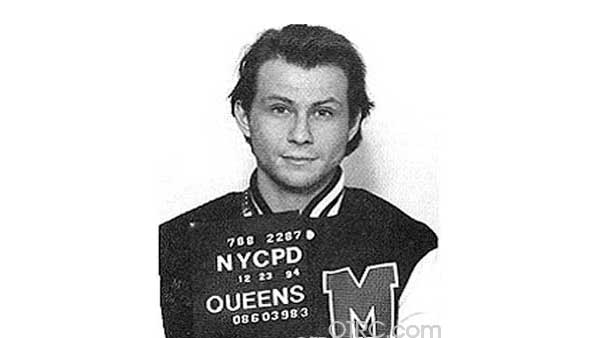
Unfortunately, Winona’s not the only “Heathers” cast member to have run-ins with the law. On December 29th,
1989, Slater was arrested for drunk driving after leading police on an early
morning car chase that ended when he wrapped his Saab around a tree. His
blood-alcohol limit was three times the legal California limit and the stunt
netted him 10 days in jail. In 1994, he was arrested at JFK Airport for trying
to board a commercial flight with an unloaded 9mm handgun. Then, in August of
1997, while under the influence of cocaine and heroin, he was arrested yet
again for beating up his girlfriend, fashion editor Michelle Jonas, and a man
who was trying to help her. When police arrived, he resisted arrest and kicked
officer Julio Flores down a flight of stairs. He was sentenced to 90 days in
jail, but only served 59. As a star on the top of the “unwanted touching tree,”
he was also charged with third degree sexual abuse in May of 2005 for
inappropriately grabbing a woman on the street.
Li-Lo’s collection of mug shots is beginning to look like its own
yearbook album. Between 2007 and 2012, she racked up more than a dozen
infractions. The lowlights: On May 26th, 2007, she’s charged with
drunk driving and possession of cocaine after crashing her car in Beverly Hills.
The lesson didn’t stick, because she gets arrested for the exact same charges
again two months later (as well as driving with a suspended license, natch).
She’s sentenced to one day in jail, but is released after serving a staggering
84 minutes. On May 20th, 2010, a bench warrant is issued when she
skips a court date to attend the Cannes Film Fest, forcing her to chalk up 100K
in bail. Subsequent fines and jail time rack up as she continues to violate the
terms of her probation. On December 12th, 2010, a Betty Ford Clinic
staff member accuses her of assault, although the charges are subsequently
dropped. On February 9th, 2011, she’s taken into custody for trying
to swipe a $2,500 necklace from a Venice jewelry store. And on November 29th,
2012, she’s nabbed for punching a woman in the face outside a Manhattan night
club. All this lends credence to the theory that she got miscast in Mean Girls.
The Canadian pop star seems to be taking a few cues from the Chris
Brown/Lindsay Lohan playbook. One, two or even three times in cuffs just isn’t
enough to solidify your street cred. On December 30th, 2013, the
Biebs and his entourage assaulted a limo driver who had the unfortunate task of
chauffeuring them around. Barely two weeks later, he plead no contest to
misdemeanor vandalism of a neighbor’s home and was ordered to pay nearly
$81,000 in damages. Nine days after that, he was arrested in Miami Beach for
illegal street racing and resisting arrest after unleashing a torrent of
profanities at local police officers. Then, on August 29th, 2014, he
was nabbed for assault and dangerous driving after his ATV collided with a
minivan that, according to his lawyers, was being driven by a member of the
paparazzi. While stars deserve some R&R too, it’s still boggling how many
turn to violence simply because their picture was taken without their
permission. Hello, you are famous!
Beyoncé’s better half may not be that much better after all. In October
of 2001, music impresario, Roc Nation mogul and Obama BFF Jay Z turned himself
into authorities for a stabbing incident that happened outside a listening
party at the Kit Kat Club on December 2, 1999. He was originally charged with
felony assault and faced up to 15 years in prison for sticking a blade into
record producer Lance “Un” Rivera over what some speculate was a disagreement about
female rapper Charli Baltimore. Ultimately, the mogul plead the charge down to
third degree assault and was sentenced to a paltry three years’ probation. Rumors
have also swirled for years that Jay Z was involved in orchestrating the murder
of fellow rapper Big L, although no proof has ever been proffered and most
consider it mere tabloid fodder. Either way, none of this seems to have hurt
him, as Forbes estimates his 2016 net worth to be about $610 million.
Philadelphia native Smith found fame in the 1980’s as one half of the
hip-hop duo DJ Jazzy Jeff and The Fresh Prince. But a poor decision in 1989
could have closed the gates to Bel Air permanently. According to police, Smith
got into a verbal altercation with promoter William Hendricks – just days after
his first Grammy win no less – and ordered his bodyguard to attack Hendricks.
The assault left Hendricks with a fractured left eye orbit that required
hospitalization, and Smith was subsequently charged with aggravated assault,
simple assault, reckless endangerment and criminal conspiracy. Smith spent a
night in jail at the West Philly police station as a result, with one witness
claiming that the other inmates were bothering him all night long for
autographs. Fortunately for Smith, the charges were later dropped, and he
denies any wrongdoing to this day. He later starred on screen as Muhammad Ali,
where his fighting talents were better suited.
White collar crime might not sound as exciting as good old-fashioned
violence, but ask Wesley Snipes about getting caught doing it: it sucks just as
much. In 2006, the Blade star was
overseas in Namibia filming his new movie Gallow
Walker when he was forced to return to Ocala, Florida to answer charges that
he fraudulently claimed refunds of almost $12 million for both 1996 and 1997
taxes that he had already paid. He was also accused of failing to file any tax
returns between 1999 and 2004, a period during which he made approximately $40
million. He eventually posted $1 million bond and was permitted to return to
Namibia to finish his film. He was later found guilty on three misdemeanor
counts of failing to file federal tax returns, went behind bars at McKean
Federal Correctional Institution on December 9th, 2010, and served
about 2.5 years of his three-year prison sentence. He was released on April 2nd,
2013, and as far as we know, has faithfully paid his taxes ever since.
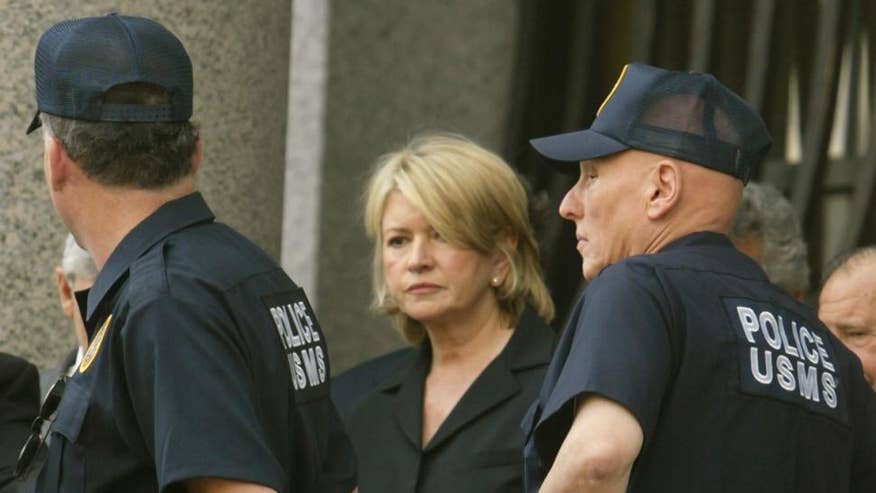
First, a little backstory. A biopharmaceutical company called ImClone
was experimenting with a new cancer drug called Erbitux back in 2001. It had
submitted the drug for FDA approval and got denied. You’re thinking, yeah, so,
what does this have to do with Martha Stewart? Just hold on to your custom
boutique throw pillows, we’re getting to it. An ImClone co-founder was arrested
for advising family and friends to sell the stock before the FDA announcement
was made, knowing it would plummet the value. One of those friends was Stewart.
(Aha, now you’re getting it!) She sold some $200,000 worth of the doomed
ImClone stock, saving herself from $45,000 in losses. This is called “insider
trading” and it’s illegal. She was arrested in June of 2003 and later found
guilty of securities fraud and lying to federal investigators. The 62-year-old
home décor magnate was sentenced to five months of hard time, five months of
house arrest, and two years of probation. While she had to step down as CEO of
Martha Stewart Living Omnimedia, word is she still taught her fellow inmates
how to crochet a mean doily.
Fans of the early 80’s sit-com seemed to get pelted with a barrage of
bad news over the years as one cast member after another was arrested for
various crimes. In 1987, Todd Bridges received a suspended sentence after
pleading no contest to making a bomb threat. In 1988, he was tried and
acquitted for attempted murder after allegedly shooting drug dealer Kenneth
Clay eight times inside a crack house. Then in May of 1990, he was arrested
again for cocaine trafficking in North Hollywood. Co-star Dana Plato also had
multiple arrests, first for forging a drug prescription in 1982 (netting her 30
days in jail) and then for robbing a Las Vegas video store in 1991 with a
pellet gun (she skated by with five years’ probation). Even Gary Coleman was
taken into custody in 2010 when, during a civil disturbance involving his wife,
authorities learned that he had an outstanding warrant stemming from a prior
incident. His response when told of the warrant? “Whatchu talkin’ bout,
Willis?!” (Okay, that was bad.)
On April 8th, 1988 in Dorchester, Massachusetts, Wahlberg
violently attacked local Vietnamese resident Thanh Lam as Lam walked to his car
with some beer he had just bought. According to reports, Wahlberg spewed racial
epithets as he smashed Lam over the head with a five-foot-long wooden stick,
leaving him unconscious. While evading police, he approached another Vietnamese
man, Hoa Trinh, and punched him in the eye. Wahlberg initially believed that he
had blinded Trinh, but it was later revealed that Trinh had already lost that
eye in the Vietnam War. Wahlberg was initially charged with attempted murder,
but later plead guilty to the lesser charge of criminal contempt. He was given
a two-year sentence, but only served 45 days at Boston’s Deer Island House of
Correction. Many believe that this stint in the brig incentivized him to turn
his life around. And thank goodness it did, or we may have been forever
deprived of the exquisite melodies of that super group we all came to know and
love – The Funky Bunch.
It seems almost like the plot of a Hollywood movie that Blake himself
might have starred in. On May 4th, 2001, the Baretta star went to dinner with his wife, Bonnie Bakley, at
Vitello’s in Studio City. Witnesses described their appearance as “unhappy.”
After the meal, she waited in the car on a side street while he went back to
retrieve a gun he had left inside (later determined by police not to be the murder weapon). Bakley was
shot to death in the car while he was gone. On April 18th, 2002,
Blake was arrested and charged with her murder, while his longtime bodyguard,
Earle Caldwell, was arrested for conspiracy. Two former stuntmen came forward
with stories that Blake tried to hire them to kill Bakley, and gun residue was
found on Blake’s hands shortly after the shooting. However, the defense team
was able to poke enough holes in the prosecution’s case to create reasonable doubt,
with jurors later describing the evidence against Blake as “flimsy.” Although
he was ultimately found not guilty, he later was forced to pay a $2 million
civil settlement to Bakley’s children. Ah, karma, the real killer.
Perhaps one of the largest and saddest falls from grace is that of Mr.
Simpson – once a heralded football star, sports commentator and film actor. On
June 12th, 1994, the bodies of his ex-wife Nicole and her friend Ron
Goldman were found brutally slain outside her Brentwood home. Five days later,
the LAPD requested that Simpson turn himself in on first degree murder charges;
instead, Simpson fled in a white Bronco owned by his friend Al Cowlings and
lead police on a long freeway chase that was beamed across the world via
helicopter news feeds. The trial lasted from January 24th to October
3rd, 1995, eventually resulting in a not guilty verdict and
Simpson’s freedom. However, like Blake, Simpson was later ordered to pay a
multi-million-dollar civil judgment to Nicole’s and Ron’s families. Then, on
September 13th, 2007, he was arrested again in an unrelated case and
ultimately found guilty of robbery, burglary and kidnapping. He is currently
serving a 33-year sentence in Nevada and will be eligible for parole on October
2nd, 2017, where he’ll likely have several reality show offers awaiting
him if released.
Sunday, August 28, 2016
Here's a treatment for a Foot Locker spec spot I wrote. See what you think...
“My Court”
We
start on a young, athletic, well-built BLACK MAN walking down the steps of a
courthouse. He wears a suit and holds a briefcase.
He
arrives at an outdoor basketball court with no one around. He sets down the
briefcase and starts taking off his tie, then his jacket, then his buttoned-up
shirt to reveal a sleek nylon tank top underneath. He slips off his pants and
shoes to reveal a pair of gym shorts, then slides into a pair of brand new high-tops.
He stands up and faces the hoop.
During
this, we hear his voice-over:
“This
is my court… It won’t ask me how my
day was… Or whether I’m ready to proceed... This court doesn’t exchange
pleasantries...”
BOOM.
Suddenly our main man explodes to the basket in a series of slam dunks, reverse
dunks and lay-ups, intercut with threes, jumpers, dribbling and the kind of
sick ball handling that would impress Phil Jackson.
We
continue to hear his voice-over as we watch this awesome display:
“But
it doesn’t have any objections either… It doesn’t require any witnesses… There
doesn’t have to be order at this
court... Here, “all rise” has a whole different meaning… At this court, I’m the
law… It doesn’t care if I take the fifth… In fact, it’s better if I don’t talk
at all... This is my other practice…”
We
see him go up for one more monster dunk, which changes from REGULAR SPEED to
SLOW MO and back again, as we hear his final voice-over explain:
“Here,
I’m the judge, jury and executioner.”
We
show a CLOSE-UP of his face – it’s serious, a game face.
And
then a FLARE CUT takes us to the FOOT LOCKER logo.
I recently produced a movie called "A New York Christmas," which Shoreline Entertainment will be releasing later this year. As part of the delivery items, I needed to create a press kit with production notes about the making of the film. Here is what I wrote. See what you think....
A New
York Christmas
ABOUT THE PRODUCTION
The story’s origins
are rooted in the filmmakers’ deep-seated love of Christmas – a time each year
when people of all colors, creeds, sizes, sexes and ages come together in
joyous celebration. It’s a time for sharing and togetherness, a time for
romance, a time to be with the ones you love. It’s a time to set aside
differences and remember what makes us the same. At the heart of the story,
writer-director Nathan Ives wanted to explore the lives of some people who
appeared very different on the surface, but were united in their dramatic,
funny and sometimes painful life experiences. In the early screenwriting
stages, there seemed like no better city for this ensemble journey to unfold
than the great melting pot that is the Big Apple. A downtown hotel, with its
transient nature, also presented the perfect stage, both literally and
figuratively, to glimpse briefly at the lives of eleven strangers... strangers
who don’t look all that different from you and me.
The journey began
in early 2014 when Ives had caught the eye of businessman Brian Conley during a
screening of Ives’s first feature film, It’s
Not You, It’s Me. Conley saw that Ives had a knack for telling personal
stories with a bittersweet blend of humor, pathos and empathy. The two decided
to team up on a feature film, and the seeds of A New York Christmas were planted. During the script’s development
phase, Ives and Conley worked closely on the characters together and flushed
out the meaning behind each storyline. Once the script was further along, Ives
reached out to his friend and former manager, Mark Heidelberger, to join him
and Conley in producing the picture. Heidelberger had been producing movies and
television for 15 years, and was not only a skilled line producer, but brought
an abundance of knowledge in development, casting, post and distribution. At
that point, the core producing team was assembled, and the three set out to
make movie magic together.
Once the script was
in solid shape, they began reaching out to cast. One of the first actors on
Ives’s go-to list was big screen veteran Ross McCall, who Ives had cast as the
lead in It’s Not You, It’s Me. McCall
had brought a great depth of emotion to the lead character in that film, and
Ives had already conceived the role of Ben with McCall in mind. In addition,
McCall’s great relationships with other strong actors (and his ability to get
them on board) earned him an executive producer spot on the team. When casting
director Sherrie Henderson began auditioning other leads, it quickly became
obvious who was right for the roles. Jaime Ray Newman’s instant chemistry with
McCall made their pairing a no-brainer. Richard Herd and Lee Meriwether
literally brought decades of experience and a grandparent-esque likeability
that’s so often missing in older characters today. Newcomers Maurice Mejia and
Catherine Toribio simply knocked their auditions out of the park. Jamie Bamber,
Linda Park, Jasika Nicole, Tracie Thoms and Chris Backus rounded out the ensemble,
each bringing an impressive toolbox of acting skills that allowed them to fully
embody their characters.
Production was
scheduled to begin in May of 2015. Ives had flown to Manhattan the Christmas
before with a second unit cinematographer to get establishing shots and B-roll
of the city. Now, the next big challenge was finding a location for principal
photography in Los Angeles that could play as New York. It not only had to have
that early 20th century urban architecture that so readily captures
the feel of Manhattan, but had to pass for it outside the windows as well.
Heidelberger had decided it was just too expensive to build all the hotel sets
on a stage, which would have at least allowed for the use of matte painting
backdrops, and therefore a normal daytime shooting schedule. Instead, the film
would have to be shot mostly at night in order for the world outside the
windows to believably play as Manhattan, which meant a tiring and unorthodox
schedule for the crew. In addition, the tight budget meant many hotels that
were used to big budget productions were out of the question. Ives and
Heidelberger scoured downtown Los Angeles for just the right place.
Fortunately, the Millennium Biltmore across from Pershing Square, right in the
heart of the metropolis, met the producers’ artistic and budgetary
qualifications; the team had found their new home for the next 12 days.
The production took
up one whole hallway on one floor for the first five days and the two-story,
multi-room Presidential Suite for the remaining seven. Rooms served as the
actors’ dressing rooms, makeup and wardrobe facilities, production offices and
equipment staging areas. The shooting schedule was as tight as the budget, and
with only two six-day weeks to shoot everything, Ives and director of
photography Kenneth Stipe found themselves having to rip through an average of
seven and a half pages a day. In addition, production designer Julian Brown was
tasked with making each room look just different enough to create some
aesthetic diversity, while still remaining similar enough to feel like they
were all in the same hotel. Not having to load in to the location and wrap out
each day allowed for more valuable shooting time. And the hotel rooms often
doubled as crash pads for cast and crew weary from an entire night of shooting;
but at the very least, they were extremely comfortable. In fact, the crew was
consistently reminded that there could have been worse places to shoot all
night.
Despite all the
obstacles, the production remained on schedule, and at the end of the 12 days,
the producers had a treasure trove of footage that was beautifully designed,
shot and acted. Now it was time to turn it into a cohesive narrative. Ives and
Heidelberger began interviewing potential editors during principal, often
before crew call or at lunch. Ultimately, they settled on Lori Ball because of
her take on the material and experience with similar films. While she and Ives
slaved away on a director’s cut, Heidelberger, also serving as post production
supervisor, began hunting for a composer who could create a score that
simultaneously captured the spirit of the season and the drama of the
plotlines. While many candidates seemed qualified, it was Alex Kovacs who most
impressed with his whimsical melodies and passion for yuletide nostalgia. With
the key post team in place, Ives and Heidelberger set about on an ambitious but
doable 21-week schedule to finish the picture.
By November of
2015, the film was complete, with the exception of a pesky little song called
“Cuddle Up” by Catey Shaw, which the producers and Sony Music were still
hammering out the publishing rights for. (This would finally get wrapped up
almost six months later!) A cast and crew premiere was held at the AMC Burbank
8, appropriately, two weeks before Christmas, providing a stress-free venue for
celebrating the achievement and the season. With the exception of a projector
malfunction during the last five minutes, which was quickly fixed, all went
well. Applause was genuine and excitement was palpable as credits rolled over a
shot of downtown Manhattan while the track “Could Be” by The Lollygaggers, an
original ditty created just for the film, played over the speakers.
There was a feeling in the air that the cast and crew
had all been a part of something special, that they had made some sort of
statement – even a small one – on the cultural significance of the country’s
favorite holiday. Hugs and handshakes continued at the Barney’s Beanery
after-party while guests sipped on stout and noshed on hors d’oeuvres. But
despite the festive atmosphere, the same nagging question kept arising in
conversation, one the producers would be tasked with answering at the top of
2016: Where will the film be shown? It was time to find the film’s audience.
The producing team had scaled Everest. Now it was time to get back down.


 to make sure you’re clear on the basic elements of film narrative like structure and character arc. Next, generate a list of one-sentence ideas (called loglines) that you think might make for catchy movies. Select your top three or four and crank out a treatment for each. You can then query production companies who are open to story pitches, place the treatments for sale on sites like Inktip, or use them as samples on freelance writing sites. While screenplay treatments may not pay nearly as much as scripts, they take much less time to create, so a prolific writer might be able to crank out several treatments per week.
 by Syd Field or Save the Cat!
 by Blake Snyder are must-reads for writers who are looking to hone their script-writing mechanics before offering up their services to others. Having writing samples ready to show is also crucial. Websites like Mandy and Screenwriting Staffing routinely have posts seeking ghostwriters. You can also create your own website to sell your services for hire and reach out to potential partner sites for cross-promotion to help get the word out.